
Event: Map and Compass Course (2 Day Event)
When: TH May 9th at Wood-Pawcatuck Watershed Association’s Headquarters from 6-9pm and Sat May 11th at Browning Mill Pond in Arcadia Management Area from 9-3pm.
A map and compass make up two of the 10 essentials recommended for safe backcountry travel, but they’ll do little good if you don’t know how to use them. Misuse could even turn a situation in which you’re simply confused into one in which you’re totally lost. The bottom line? Learn proper technique before your safety depends on it.
Compass Basics
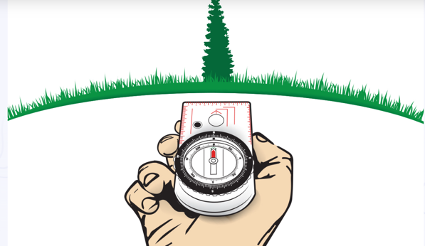
A baseplate compass includes three important parts (see opposite page):
- The baseplate, which features the direction-of-travel arrow, or DOT, and the index pointer;
- The compass housing, which includes the orienteering arrow (a.k.a. the shed), the orienteering
lines, and the dial with degrees; - The magnetic needle. A compass works by aligning itself with Earth’s magnetic field. The red, or magnetic, north end on a compass needle has been magnetized with a positive charge and is attracted by its opposite: Earth’s south magnetic pole, which is located near the geographic North Pole.
Yes, you read that right. The red end of the needle on your compass points to the south magnetic pole. But by convention, and to avoid confusion, we say that a compass needle always points north.
Leave a Reply